
Introduction
Every day, people make countless decisions—some small and some significant. While it may seem that decisions are made logically, psychological research shows that human decision-making is often influenced by mental shortcuts and cognitive processes.
Understanding how decisions are made can help improve judgment and reduce common errors in thinking.
1. How People Make Decisions
In theory, decisions should be based on logic and complete information. However, in reality, people often rely on heuristics, which are mental shortcuts that simplify complex choices.
These shortcuts help the brain process information quickly, but they can also lead to systematic errors in judgment.
2. Factors That Influence Decisions
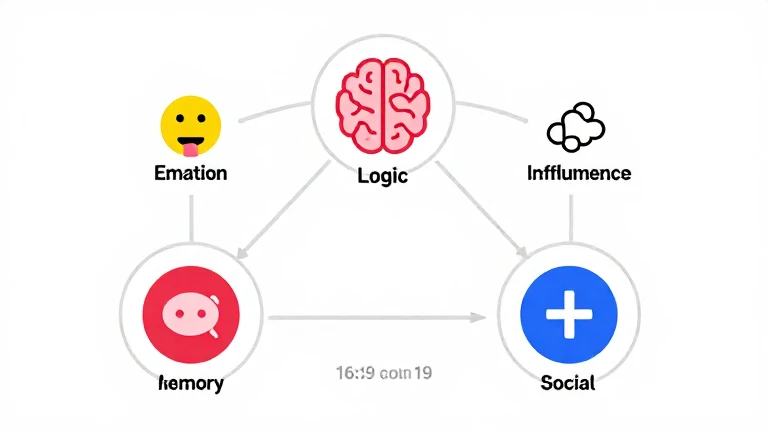
Several key factors influence decision-making:
Emotion
Feelings can strongly affect choices, sometimes more than logic.
Experience
Past experiences shape how people interpret current situations.
Social Influence
Opinions from others can impact personal decisions.
Cognitive Bias
Mental patterns can lead to predictable thinking errors.
3. Common Patterns in Thinking
People often believe they are making objective decisions, but several common patterns exist:
- Preferring familiar options over unknown ones
- Overestimating recent information
- Relying on first impressions
- Seeking confirming evidence
These patterns are natural and occur in most individuals.
4. Real-Life Examples

A. Financial Choices
People may choose investments based on recent performance rather than long-term data.
B. Consumer Behavior
Purchasing decisions are often influenced by presentation and perception.
C. Career Decisions
Many individuals stay in familiar environments due to comfort and uncertainty.
5. Improving Decision Quality
Although cognitive shortcuts are natural, decision quality can be improved by:
- Gathering more information before deciding
- Considering alternative options
- Reducing emotional influence when possible
- Reviewing past decisions for learning
- Taking time before important choices
These strategies help create more balanced and rational decisions.
Conclusion

Decision-making is a complex process influenced by both rational thinking and psychological factors.
By becoming aware of these influences, individuals can make more thoughtful and effective choices in everyday life.
Category
Psychology | Decision-Making
Tags
#DecisionMaking
#Psychology
#Thinking
#BehavioralScience
#SelfDevelopment
'Behavioral Finance' 카테고리의 다른 글
| The Benefits of Consistent Learning in a Changing World (0) | 2026.04.17 |
|---|---|
| The Importance of Focus in a Distracted World (0) | 2026.04.16 |
| How Daily Habits Shape Long-Term Success (1) | 2026.04.14 |
| Subjective Validation: When Vague Feels Personal (0) | 2026.04.04 |
| Less-is-Better Effect: When Less Feels More Valuable (0) | 2026.04.04 |


