728x90
반응형

Semmelweis Reflex refers to the tendency to reject new information or evidence simply because it contradicts existing beliefs or established norms.
1. What Is the Semmelweis Reflex?
- People instinctively dismiss new ideas that challenge their current beliefs.
- This reaction happens without careful evaluation of the evidence.
- It often appears in science, organizations, and everyday thinking.
2. Why It Happens
- Belief Persistence: Strong attachment to existing beliefs.
- Cognitive Dissonance: Discomfort from conflicting information.
- Authority & Tradition: Trust in established systems over new ideas.
- Fear of Change: Resistance to uncertainty and disruption.
3. Examples of the Semmelweis Reflex
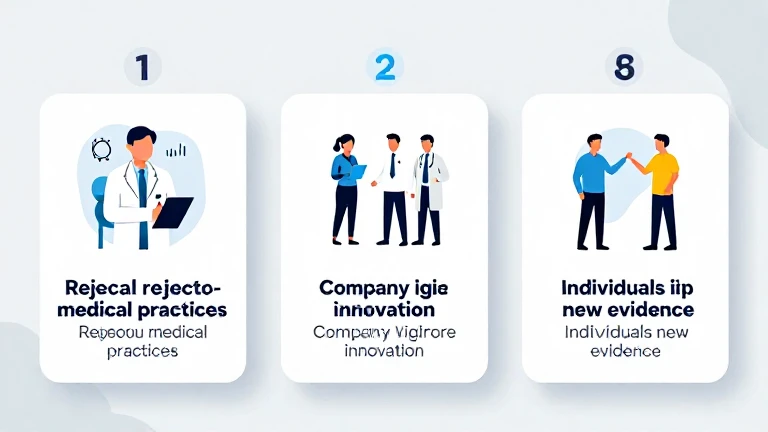
- Medicine: Early rejection of handwashing practices despite evidence.
- Business: Companies ignoring disruptive innovations.
- Science: Resistance to new theories that challenge established models.
- Daily Life: Dismissing unfamiliar ideas without consideration.
4. Risks of This Bias
- Missed Innovation: Valuable ideas are ignored.
- Delayed Progress: Change happens slower than necessary.
- Poor Decisions: Rejecting beneficial evidence.
- Closed Mindset: Reduced ability to adapt and learn.
5. How to Overcome the Semmelweis Reflex
- Stay Open-Minded: Consider new ideas objectively.
- Evaluate Evidence: Focus on data, not tradition.
- Encourage Debate: Healthy discussion improves understanding.
- Question Assumptions: Re-examine long-held beliefs.
- Adopt a Learning Mindset: Be willing to update views.
Conclusion
The Semmelweis Reflex shows how people often reject new ideas simply because they challenge existing beliefs. While skepticism can be useful, automatic rejection can block progress and innovation.
By focusing on evidence and open thinking, individuals and organizations can make better decisions and adapt more effectively.
Category
Cognitive Bias | Psychology | Decision-Making
Tags
#SemmelweisReflex
#CognitiveBias
#Psychology
#DecisionMaking
#CriticalThinking
반응형
'Behavioral Finance' 카테고리의 다른 글
| Social Comparison Bias: Measuring Ourselves Against Others (0) | 2026.04.03 |
|---|---|
| Selection Bias: When the Sample Misleads the Conclusion (0) | 2026.04.02 |
| Selective Perception: Seeing What We Want to See (0) | 2026.04.02 |
| Rhyme-as-Reason Effect: When Rhymes Feel True (0) | 2026.04.01 |
| Recency Illusion: Why Things Suddenly Seem Everywhere (0) | 2026.04.01 |


