728x90
반응형

Money Illusion refers to the cognitive bias where people focus on the face value of money rather than its real purchasing power.
1. What Is Money Illusion?
- Individuals often react to nominal prices or wages without considering inflation or real value.
- This can lead to overestimating gains or underestimating losses simply because the numbers look bigger or smaller.
2. Why It Happens
- Nominal Focus: People intuitively notice numbers rather than adjusting for inflation.
- Psychological Anchoring: A higher paycheck feels like a gain even if real purchasing power hasn’t increased.
- Cognitive Laziness: Calculating real value requires extra effort, so the brain often ignores it.
3. Examples of Money Illusion
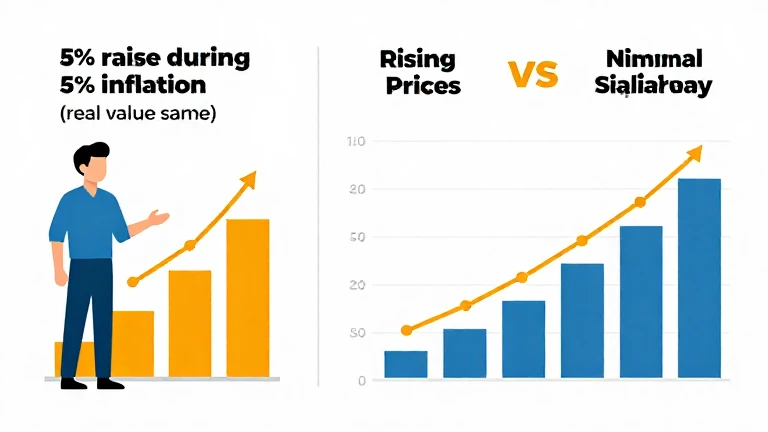
- Salaries & Raises: A 5% salary increase may feel rewarding, but if inflation is also 5%, real earnings haven’t increased.
- Retail & Pricing: Consumers may buy items because the price number seems “smaller,” even if value-adjusted it’s the same.
- Investments: People may rejoice over nominal gains without considering real returns after inflation or fees.
- Loans & Debt: Nominal interest rates may seem low, ignoring the effect of inflation on real cost.
4. Risks of Money Illusion
- Misjudged Wealth: People may overestimate their financial position.
- Poor Decisions: Spending, investing, or borrowing decisions may be misguided.
- Inflation Blindness: Failing to account for real value reduces long-term financial planning effectiveness.
5. How to Avoid Money Illusion
- Focus on Real Value: Adjust earnings, prices, and returns for inflation.
- Think in Purchasing Power: Ask, “What can this money actually buy me?”
- Compare Over Time: Look at historical prices and wages in real terms.
- Financial Education: Awareness of inflation and nominal vs real value helps prevent bias.
Conclusion
Money Illusion shows how numbers can mislead perceptions of value. Focusing on nominal amounts instead of real purchasing power can distort financial decisions.
By paying attention to real value, inflation, and context, individuals can make smarter financial choices and avoid being misled by the apparent size of money.
Category
Behavioral Economics | Cognitive Bias | Personal Finance
Tags
#MoneyIllusion
#BehavioralEconomics
#CognitiveBias
#FinancePsychology
#NominalVsReal
반응형
'Behavioral Finance' 카테고리의 다른 글
| Neglect of Probability: Ignoring the Odds (0) | 2026.03.26 |
|---|---|
| Negativity Bias: Why We Focus on the Bad (0) | 2026.03.26 |
| Mere Exposure Effect: The More You See, The More You Like (0) | 2026.03.25 |
| Ludic Fallacy: Overestimating What You Can Predict (0) | 2026.03.25 |
| Just-World Hypothesis: Believing the World Is Fair (0) | 2026.03.24 |


