728x90
반응형
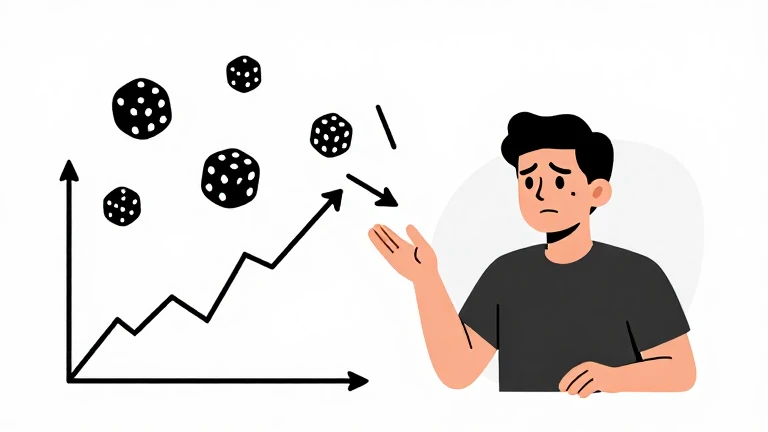
Ludic Fallacy occurs when people assume that real-life uncertainty can be neatly modeled by rules, games, or simplified assumptions. It warns against relying too heavily on models that fail to capture rare, extreme, or complex events.
1. What Is the Ludic Fallacy?
- Coined by Nassim Nicholas Taleb, it highlights how real-world randomness is more complex than games or statistical models suggest.
- People often underestimate rare events or over-rely on simplified models of reality.
2. Why It Happens
- Overconfidence in Models: Believing a simulation or formula captures reality perfectly.
- Simplified Thinking: Preferring structured games or scenarios to understand uncertainty.
- Neglect of Extremes: Rare events (Black Swans) are often ignored because they don’t appear in models.
3. Examples of the Ludic Fallacy

- Finance: Traders relying solely on historical volatility models and ignoring extreme market crashes.
- Insurance & Risk: Using only average outcomes to prepare for disasters, neglecting rare catastrophes.
- Everyday Life: Assuming controlled experiments can fully predict human behavior or events.
4. Risks of the Ludic Fallacy
- Underestimating Risk: Rare, high-impact events can occur unexpectedly.
- Overreliance on Models: Decisions may fail when reality doesn’t fit assumptions.
- False Confidence: Simplified rules give the illusion of control or predictability.
- Systemic Vulnerabilities: Organizations relying only on models may collapse in unforeseen conditions.
5. How to Reduce the Ludic Fallacy
- Recognize Model Limits: Understand that simulations and games are simplifications.
- Plan for Extremes: Consider rare, high-impact scenarios when making decisions.
- Stress-Test Systems: Test strategies under unexpected or extreme conditions.
- Embrace Uncertainty: Accept that not all outcomes can be predicted.
Conclusion
The Ludic Fallacy reminds us that life is not a game with fixed rules. While models and simulations are useful, overconfidence in their predictive power can be dangerous.
By acknowledging unpredictability and preparing for rare events, individuals and organizations can make more robust and resilient decisions.
Category
Cognitive Bias | Risk & Decision-Making | Behavioral Economics
Tags
#LudicFallacy
#CognitiveBias
#BehavioralEconomics
#RiskManagement
#BlackSwan
반응형
'Behavioral Finance' 카테고리의 다른 글
| Money Illusion: When Nominal Value Misleads You (0) | 2026.03.25 |
|---|---|
| Mere Exposure Effect: The More You See, The More You Like (0) | 2026.03.25 |
| Just-World Hypothesis: Believing the World Is Fair (0) | 2026.03.24 |
| Irrational Escalation: When People Keep Doubling Down (0) | 2026.03.24 |
| Neglect of Sample Size: Why Small Numbers Can Mislead (0) | 2026.03.24 |


