728x90
반응형
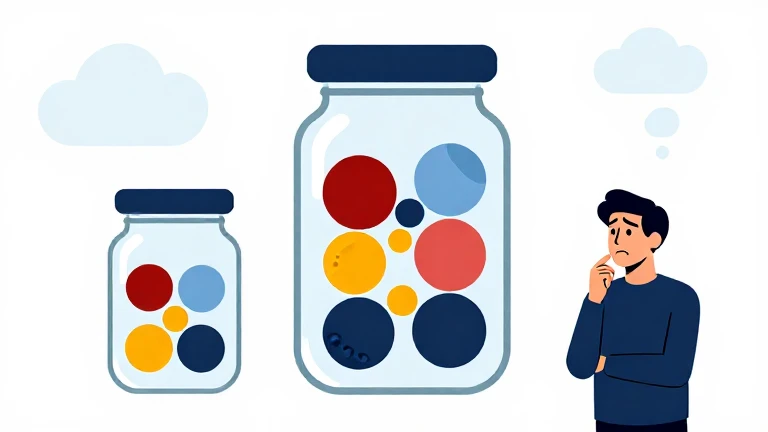
People often make judgments without considering the size of the sample. This cognitive bias, known as Neglect of Sample Size, occurs when individuals assume results from small samples are as reliable as those from large samples.
1. What Is Neglect of Sample Size?
- Tendency to ignore how the size of a dataset affects reliability.
- Small samples are more prone to random variation and extreme outcomes.
- Bias can affect decisions in statistics, business, healthcare, and daily life.
2. Why It Happens
- Overconfidence: People trust any observed trend without checking sample size.
- Pattern-Seeking: The brain prefers neat patterns even if based on few observations.
- Simplification: Considering sample size adds cognitive load, so it’s often skipped.
3. Examples of Neglect of Sample Size
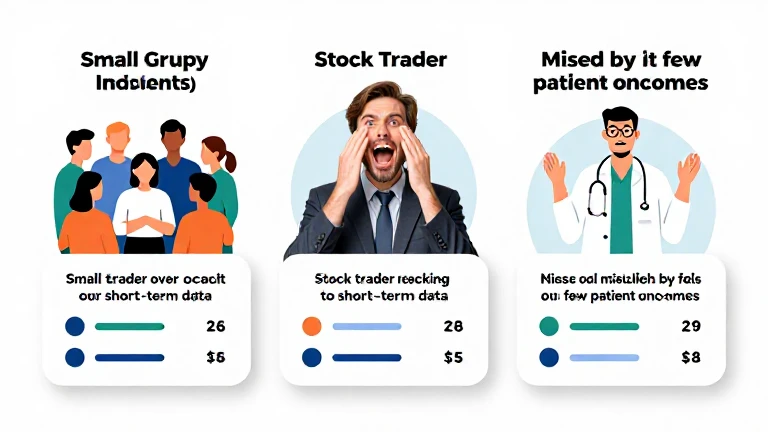
- Medical Studies: Drawing conclusions from very small patient groups.
- Investing: Believing short-term stock movements indicate long-term trends.
- Surveys & Polls: Treating a poll of a few dozen people as highly representative.
- Everyday Life: Assuming patterns from a few observations apply broadly (e.g., “I met two rude taxi drivers, so all taxi drivers must be rude”).
4. Risks of Neglecting Sample Size
- False Conclusions: Small samples can give misleading averages or extremes.
- Poor Decisions: Overreacting to random variation instead of true trends.
- Overconfidence: Belief in unreliable data increases risk-taking.
- Misinterpretation: Ignoring variability leads to misunderstanding outcomes.
5. How to Avoid It
- Check Sample Size: Consider how large the dataset is before drawing conclusions.
- Understand Variability: Small samples are more likely to show extreme results.
- Use Statistical Tools: Apply confidence intervals or error margins.
- Compare Multiple Samples: Larger, repeated observations give more reliable insights.
- Think Probabilistically: Accept that small samples are less predictive than large ones.
Conclusion
Neglect of Sample Size reminds us that not all data is equally reliable. Small samples may produce extreme or misleading outcomes.
By considering sample size and variability, individuals can make more accurate, evidence-based decisions.
Category
Cognitive Bias | Decision-Making | Statistics
Tags
#NeglectOfSampleSize
#StatisticsBias
#DecisionMaking
#CognitiveBias
#EvidenceBased
반응형
'Behavioral Finance' 카테고리의 다른 글
| Just-World Hypothesis: Believing the World Is Fair (0) | 2026.03.24 |
|---|---|
| Irrational Escalation: When People Keep Doubling Down (0) | 2026.03.24 |
| Information Bias: When More Isn’t Always Better (0) | 2026.03.23 |
| Shock Bias: Why We Notice the Dramatic (0) | 2026.03.23 |
| Illusory Correlation: Seeing Patterns That Aren’t There (0) | 2026.03.23 |


