728x90
반응형

Humans are naturally pattern-seeking. However, sometimes we perceive a relationship between two variables that doesn’t actually exist. This cognitive bias is called Illusory Correlation.
1. What Is Illusory Correlation?
- The tendency to assume a relationship between two unrelated events or characteristics.
- Often occurs when unusual or salient events coincide.
- Can lead to stereotypes, superstitions, and flawed judgments.
2. How It Works
- People notice rare or distinctive events.
- They overestimate the frequency of their co-occurrence.
- A mental connection is formed even without real causation.
3. Examples of Illusory Correlation
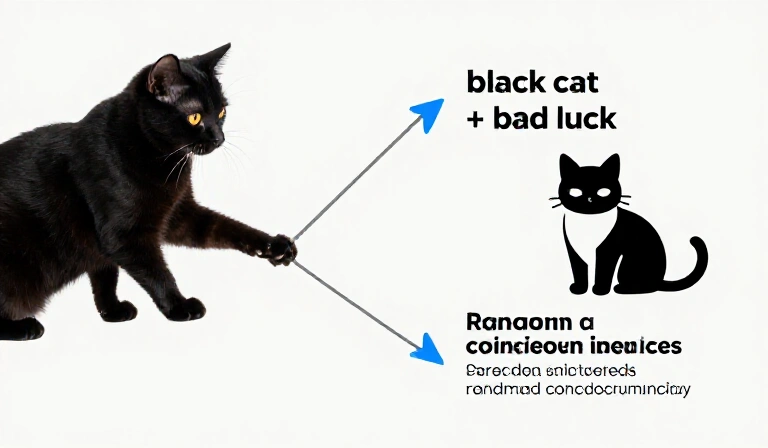
- Stereotypes: Believing a small minority group behaves in a certain way more often than it does.
- Superstitions: Assuming a lucky charm influences random outcomes.
- Investing: Seeing a “pattern” in random stock fluctuations.
- Gambling: Believing a sequence of wins or losses is meaningful.
4. Why Illusory Correlation Happens
- Salience Bias: Rare or striking events grab attention.
- Confirmation Bias: People notice instances that support their beliefs.
- Cognitive Shortcuts: The brain simplifies complex data into perceived patterns.
- Memory Distortion: Unusual co-occurrences are more memorable than mundane ones.
5. Risks of Illusory Correlation
- Stereotyping & Prejudice: Misjudging people based on perceived patterns.
- Poor Decision-Making: Acting on non-existent correlations.
- Superstitious Behavior: Relying on false patterns.
- Investment Errors: Misinterpreting random fluctuations as trends.
6. How to Reduce Illusory Correlation
- Check Actual Data: Look at large, representative samples.
- Question Patterns: Ask if the correlation makes logical sense.
- Be Mindful of Salience: Notice whether unusual events are influencing perception.
- Seek Disconfirming Evidence: Test the relationship rather than assuming it.
- Separate Coincidence from Causation: Remember that co-occurrence does not imply cause.
Conclusion
Illusory Correlation shows how people often perceive connections that aren’t real, leading to biased judgments and misinformed decisions.
By carefully evaluating evidence and questioning perceived patterns, individuals can avoid false associations and make more rational choices.
Category
Cognitive Bias | Critical Thinking
Tags
#IllusoryCorrelation
#CognitiveBias
#CriticalThinking
#Psychology
#DecisionMaking
#PatternRecognition
반응형
'Behavioral Finance' 카테고리의 다른 글
| Information Bias: When More Isn’t Always Better (0) | 2026.03.23 |
|---|---|
| Shock Bias: Why We Notice the Dramatic (0) | 2026.03.23 |
| Just-World Hypothesis: Why We Believe the World Is Fair (0) | 2026.03.22 |
| Illusion of Control: Why We Believe We Can Influence the Uncontrollable (0) | 2026.03.22 |
| Reactive Devaluation: Why We Undervalue Ideas from the “Other Side” (0) | 2026.03.22 |


