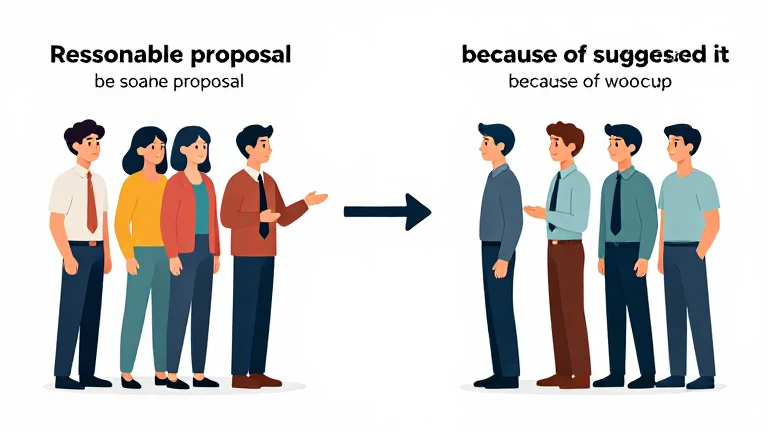
People like to believe they evaluate ideas objectively. However, in reality, the source of an idea often matters as much as the idea itself. This cognitive bias is known as Reactive Devaluation.
Reactive Devaluation refers to the tendency to dismiss or undervalue a proposal simply because it comes from an opposing group or person.
1. What Is Reactive Devaluation?
- The same idea is judged differently depending on who presents it.
- Proposals from opponents are often seen as less valuable or trustworthy.
- Even reasonable or beneficial ideas may be rejected due to their source.
2. How It Works
- An idea is presented by an opposing side.
- Instead of evaluating the content objectively, people focus on the source.
- The idea is discounted, criticized, or rejected.
3. Examples of Reactive Devaluation

- Politics:
A policy proposal is supported when introduced by one party but rejected when proposed by another. - Negotiations:
Offers from the opposing side are viewed with suspicion or undervalued. - Workplace:
Employees may dismiss ideas from rival teams or disliked colleagues. - Business & Competition:
Companies may ignore useful strategies simply because competitors use them.
4. Why Reactive Devaluation Happens
Several psychological factors contribute:
- In-Group Bias: Preference for ideas from one’s own group.
- Distrust of Opponents: Assuming the other side has hidden motives.
- Emotional Influence: Negative feelings affect judgment.
- Cognitive Shortcuts: Judging ideas quickly based on source rather than content.
5. Risks of Reactive Devaluation
- Missed Opportunities: Good ideas are ignored.
- Ineffective Decisions: Choices are based on bias rather than merit.
- Conflict Escalation: Disagreements become more entrenched.
- Reduced Collaboration: Cooperation becomes difficult.
6. How to Reduce Reactive Devaluation
- Evaluate Ideas Independently: Focus on content, not the source.
- Ask Objective Questions: “Would I accept this if it came from my side?”
- Encourage Neutral Presentation: Present ideas without revealing their origin.
- Build Trust: Reduce emotional resistance through communication.
- Practice Perspective-Taking: Try to understand the reasoning behind proposals.
Conclusion
Reactive Devaluation shows how bias toward the source of an idea can distort judgment. Even valuable proposals may be rejected simply because they come from an opposing side.
By focusing on the content rather than the source, individuals can make more rational decisions and avoid missing important opportunities.
Category
Cognitive Bias | Social Psychology
Tags
#ReactiveDevaluation
#CognitiveBias
#DecisionMaking
#Negotiation
#Psychology
#CriticalThinking
#SocialBias


