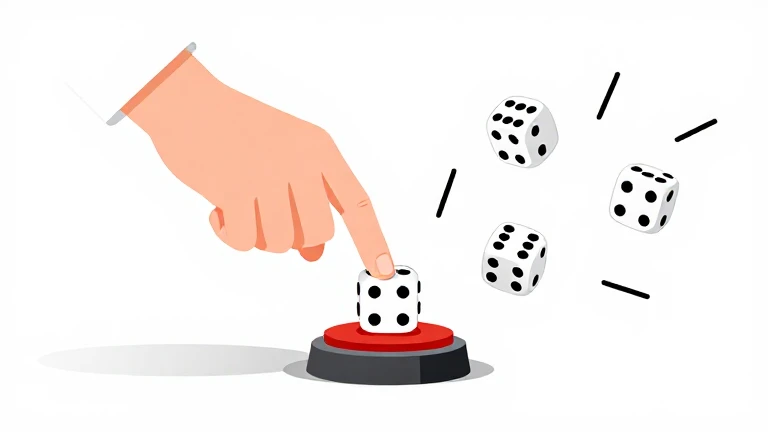
People often believe they have more control over events than they actually do. This tendency is known as the Illusion of Control.
The Illusion of Control refers to the tendency to overestimate one’s ability to influence outcomes that are largely determined by chance.
1. What Is the Illusion of Control?
- People believe their actions can affect random or uncontrollable outcomes.
- This belief persists even when results are purely based on chance.
- It creates a false sense of influence over events.
2. How It Works
- A person performs an action (e.g., choosing numbers, rolling dice).
- They associate the action with the outcome.
- Over time, they develop a belief that their behavior affects results.
3. Examples of the Illusion of Control
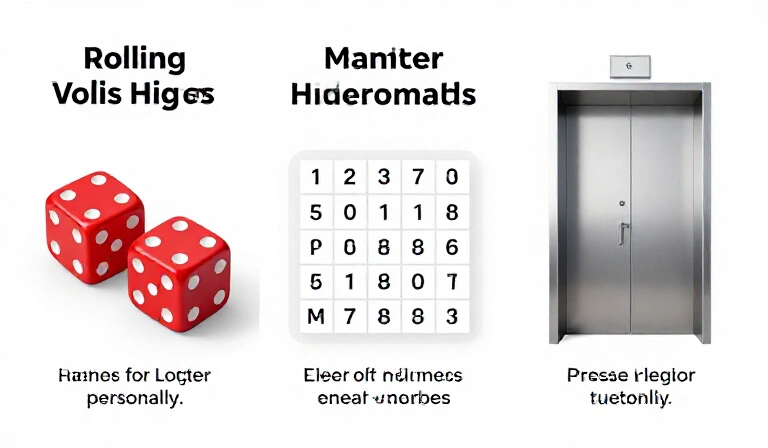
- Gambling:
Rolling dice harder for higher numbers or softer for lower ones. - Lottery:
Preferring to pick your own numbers instead of using random selection. - Investing:
Believing personal decisions can control unpredictable market movements. - Everyday Behavior:
Pressing elevator buttons multiple times as if it speeds up the process.
4. Why the Illusion of Control Happens
Several psychological factors contribute:
- Pattern Recognition: The brain looks for cause-and-effect relationships.
- Desire for Control: People feel more comfortable believing they have influence.
- Past Experiences: Occasional success reinforces the illusion.
- Overconfidence: Belief in personal ability extends beyond reality.
5. Risks of the Illusion of Control
- Financial Losses: Risky decisions in gambling or investing.
- Overconfidence: Ignoring uncertainty and randomness.
- Poor Decision-Making: Believing skill exists where it does not.
- Misjudging Risk: Underestimating the role of chance.
6. How to Reduce the Illusion of Control
- Recognize Randomness: Accept that some outcomes are uncontrollable.
- Focus on Probabilities: Base decisions on odds, not feelings.
- Separate Skill from Luck: Identify where skill actually matters.
- Track Results Objectively: Evaluate outcomes using data.
- Stay Humble: Acknowledge uncertainty in complex systems.
Conclusion
The Illusion of Control shows how people often overestimate their influence over random events. While having a sense of control can feel reassuring, it can also lead to poor decisions when chance plays a major role.
By understanding the limits of control and focusing on probabilities, individuals can make more rational and informed choices.
Category
Cognitive Bias | Behavioral Economics
Tags
#IllusionOfControl
#CognitiveBias
#DecisionMaking
#BehavioralEconomics
#Psychology
#Investing
#RiskManagement
'Behavioral Finance' 카테고리의 다른 글
| Illusory Correlation: Seeing Patterns That Aren’t There (0) | 2026.03.23 |
|---|---|
| Just-World Hypothesis: Why We Believe the World Is Fair (0) | 2026.03.22 |
| Reactive Devaluation: Why We Undervalue Ideas from the “Other Side” (0) | 2026.03.22 |
| Hostile Media Effect: Why Everyone Thinks the Media Is Biased Against Them (0) | 2026.03.21 |
| Hindsight Bias: Why Everything Feels “Obvious” After It Happens (0) | 2026.03.21 |


