728x90
반응형
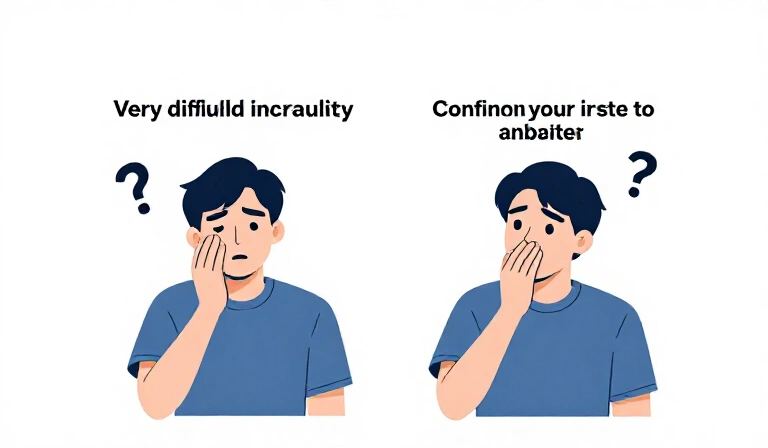
People often misjudge how well they will perform on tasks. Surprisingly, we tend to be overconfident in difficult tasks and underconfident in easy ones. This cognitive bias is known as the Hard–Easy Effect.
1. What Is the Hard–Easy Effect?
- Overconfidence in difficult tasks: People believe they will perform better than they actually do.
- Underconfidence in easy tasks: People underestimate their chances of success.
- This creates a mismatch between perceived ability and actual performance.
2. How It Works
- When tasks are difficult, uncertainty is high, but people still make bold predictions.
- When tasks are easy, people second-guess themselves and become overly cautious.
- As a result, confidence does not align with reality.
3. Examples of the Hard–Easy Effect
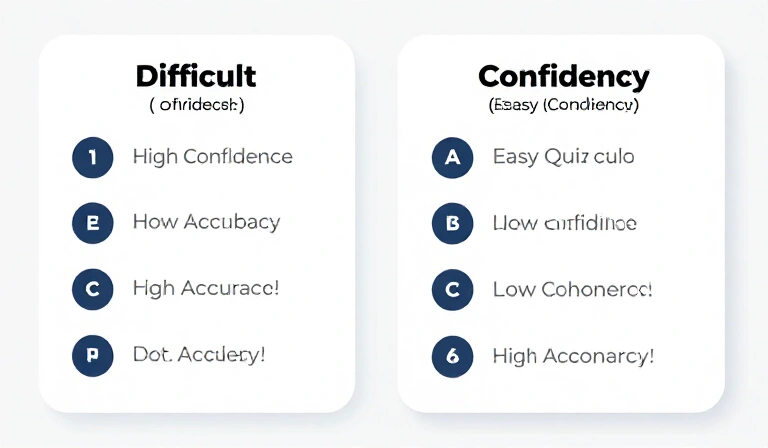
- Exams:
Students feel confident about difficult questions but get them wrong, while doubting easy questions they answer correctly. - Investing:
Investors may feel overly confident predicting complex markets but hesitate in simple, clear opportunities. - Work Tasks:
Overestimating ability in challenging projects while undervaluing competence in routine tasks. - Trivia & Knowledge Tests:
People give high confidence to wrong answers on hard questions and low confidence to correct answers on easy ones.
4. Why the Hard–Easy Effect Happens
Several psychological factors contribute:
- Calibration Error: Confidence is not properly aligned with accuracy.
- Limited Knowledge Awareness: People don’t fully recognize what they don’t know.
- Cognitive Bias: Difficulty distorts judgment about performance.
- Uncertainty Misinterpretation: People misread uncertainty as confidence or doubt.
5. Risks of the Hard–Easy Effect
- Poor Decisions: Overconfidence in complex situations leads to mistakes.
- Missed Opportunities: Underconfidence causes hesitation in simple decisions.
- Inefficient Learning: Misjudging performance slows improvement.
- Overcommitment: Taking on challenges without realistic assessment.
6. How to Reduce the Hard–Easy Effect
- Check Accuracy vs Confidence: Compare your predictions with actual results.
- Use Feedback: Learn from mistakes to calibrate judgment.
- Break Down Tasks: Analyze difficult problems into smaller parts.
- Trust Evidence in Easy Tasks: If it’s simple and clear, avoid unnecessary doubt.
- Stay Humble in Complexity: Recognize uncertainty in difficult situations.
Conclusion
The Hard–Easy Effect reveals how confidence can become disconnected from reality. People often feel too sure when they should be cautious and too doubtful when they should be confident.
By calibrating confidence with actual performance and relying on feedback, individuals can make more accurate judgments and better decisions.
Category
Cognitive Bias | Decision Making
Tags
#HardEasyEffect
#CognitiveBias
#Overconfidence
#DecisionMaking
#BehavioralPsychology
#SelfAwareness
#Learning
반응형


