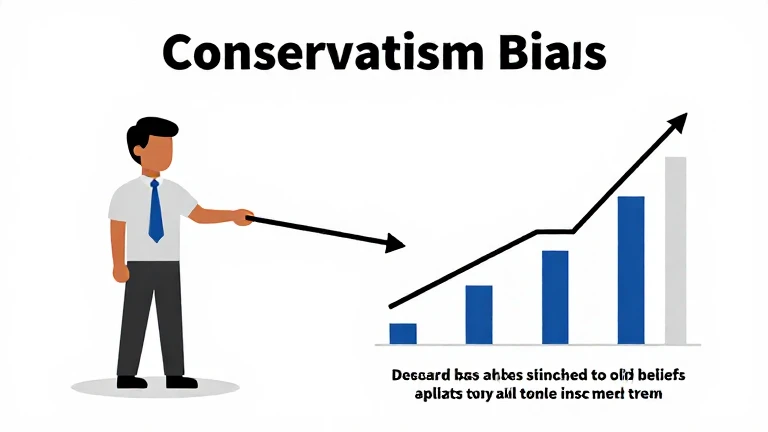
In decision-making and judgment, people often rely on existing beliefs or initial information. Even when new evidence becomes available, individuals may hesitate to adjust their views. This tendency is known as Conservatism Bias.
Conservatism Bias refers to the tendency to insufficiently revise or update beliefs when new information is presented. Instead of quickly incorporating new evidence, people often remain anchored to their previous assumptions.
This bias can influence decision-making in fields such as finance, business, science, and everyday reasoning.
1. What Is Conservatism Bias?
Conservatism Bias occurs when individuals give too much weight to prior beliefs and too little weight to new evidence.
Ideally, people should update their beliefs proportionally when new information arises. However, due to this bias, adjustments are often too small or too slow.
As a result, outdated assumptions may continue influencing decisions even when circumstances change.
2. Why Conservatism Bias Happens
- Attachment to Existing Beliefs: Comfort with familiar ideas can make people resist change.
- Cognitive Effort: Updating beliefs takes mental energy, especially when new evidence contradicts prior expectations.
- Desire for Stability: Frequent changes in beliefs create uncertainty; maintaining consistency feels safer.
3. Conservatism Bias in Investing
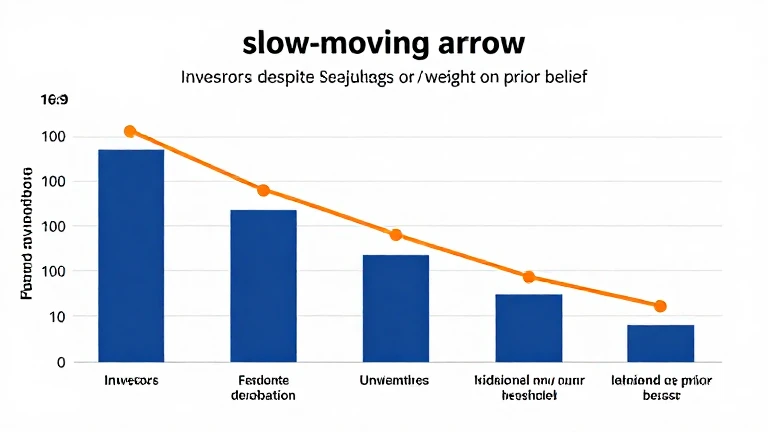
- Slow Reaction to New Financial Information: Investors may continue valuing a company based on past performance, ignoring updated data.
- Earnings Announcements: Some adjust expectations too slowly after new reports, affecting stock prices.
- Changing Market Conditions: Even when economic conditions shift, previous strategies may dominate decisions due to past success.
4. Risks of Conservatism Bias
- Delayed Response to Important Changes: Missed opportunities or increased risks.
- Persistence of Incorrect Assumptions: Old ideas remain influential despite contradictory evidence.
- Reduced Adaptability: Slow updating is disadvantageous in rapidly changing environments.
5. How to Reduce Conservatism Bias
- Regularly review new evidence: Actively reassess beliefs as information changes.
- Separate past success from current reality: Previous wins don’t guarantee future results.
- Use data-driven evaluation: Objective analysis balances prior beliefs with new facts.
- Remain open to change: Adapting to new evidence is essential for effective decisions.
Conclusion
Conservatism Bias demonstrates how people often update beliefs too slowly when facing new information. While consistency feels comfortable, it may prevent effective responses to change.
By staying open to new evidence and reassessing assumptions, individuals can make more adaptive and informed decisions in finance, business, and everyday life.
Category
Finance / Investment | Behavioral Psychology
Tags
#InvestmentPsychology
#BehavioralFinance
#ConservatismBias
#CognitiveBias
#DecisionMaking
#InvestorMindset
#RiskAssessment
#CriticalThinking
#AdaptiveThinking
#BehavioralEconomics
'Behavioral Finance' 카테고리의 다른 글
| Contrast Effect: How Comparisons Influence Our Perception (0) | 2026.03.15 |
|---|---|
| Conservatism (Bayesian): Why People Update Beliefs Too Slowly (0) | 2026.03.14 |
| Conjunction Fallacy: When More Specific Stories Seem More Likely (0) | 2026.03.14 |
| Congruence Bias: Why We Test Ideas in Ways That Confirm Them (0) | 2026.03.13 |
| Confirmation Bias: Why We Prefer Information That Supports Our Beliefs (0) | 2026.03.13 |


