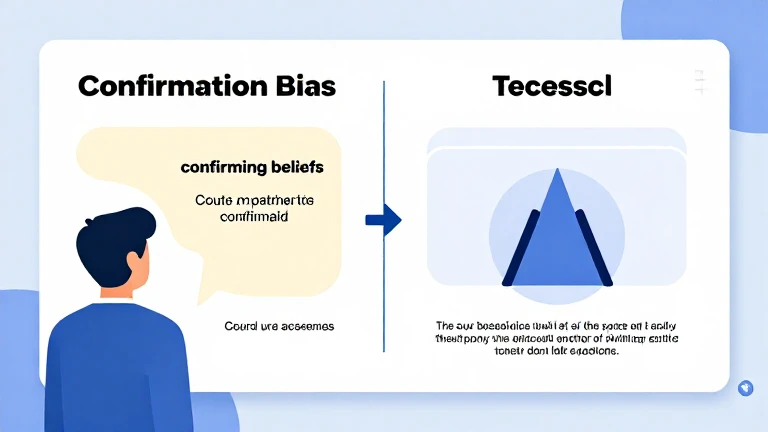
Human thinking is not always perfectly objective. When people form opinions or beliefs, they often search for information that supports those views while overlooking evidence that contradicts them. This psychological tendency is known as Confirmation Bias.
Confirmation Bias refers to the tendency to favor information that confirms existing beliefs while ignoring or discounting evidence that challenges them. This bias can influence decision-making in politics, science, business, and investing.
1. What Is Confirmation Bias?
Confirmation Bias occurs when individuals selectively gather, interpret, and remember information in a way that reinforces their existing beliefs.
Instead of evaluating all available evidence objectively, people may:
- Focus on information that supports their viewpoint
- Ignore contradictory data
- Interpret ambiguous evidence in ways that confirm their assumptions
This process strengthens existing beliefs, even when they may not be accurate.
2. Why Confirmation Bias Happens
- Cognitive Comfort: Agreeing information feels reassuring, while conflicting information creates discomfort.
- Mental Efficiency: Processing aligned information requires less effort.
- Emotional Attachment: Emotional ties to beliefs make opposing ideas harder to accept.
3. Examples of Confirmation Bias

- News and Media: Prefer sources that align with views while avoiding opposing perspectives.
- Online Communities: Interacting with like-minded individuals reinforces existing beliefs.
- Investing Decisions: Seeking only positive news about a favored stock while ignoring warnings.
4. Risks of Confirmation Bias
- Distorted Understanding: Ignoring contradictory information leads to incomplete conclusions.
- Overconfidence: Reinforcing beliefs may create excessive confidence.
- Poor Decision-Making: Warning signs may be overlooked if they conflict with expectations.
5. How to Reduce Confirmation Bias
- Actively seek opposing viewpoints: Explore different perspectives.
- Evaluate evidence objectively: Focus on data quality, not just support for beliefs.
- Ask critical questions: Consider alternative explanations.
- Encourage diverse discussions: Engage with people holding different views.
Conclusion
Confirmation Bias demonstrates how people naturally gravitate toward information that supports existing beliefs. While it feels comfortable, it may limit objectivity and lead to flawed decisions.
By examining opposing evidence and keeping an open mindset, individuals can make more balanced and informed judgments.
Category
Finance / Investment | Behavioral Psychology
Tags
#InvestmentPsychology
#BehavioralFinance
#ConfirmationBias
#CognitiveBias
#DecisionMaking
#StockMarketPsychology
#InvestorMindset
#CriticalThinking
#MediaBias
#TradingPsychology
'Behavioral Finance' 카테고리의 다른 글
| Conjunction Fallacy: When More Specific Stories Seem More Likely (0) | 2026.03.14 |
|---|---|
| Congruence Bias: Why We Test Ideas in Ways That Confirm Them (0) | 2026.03.13 |
| Clustering Illusion: Seeing Patterns in Random Events (0) | 2026.03.13 |
| Choice-Supportive Bias: Why We Defend Our Past Decisions (0) | 2026.03.12 |
| Bias Blind Spot: Why We Notice Bias in Others but Not in Ourselves (0) | 2026.03.12 |


