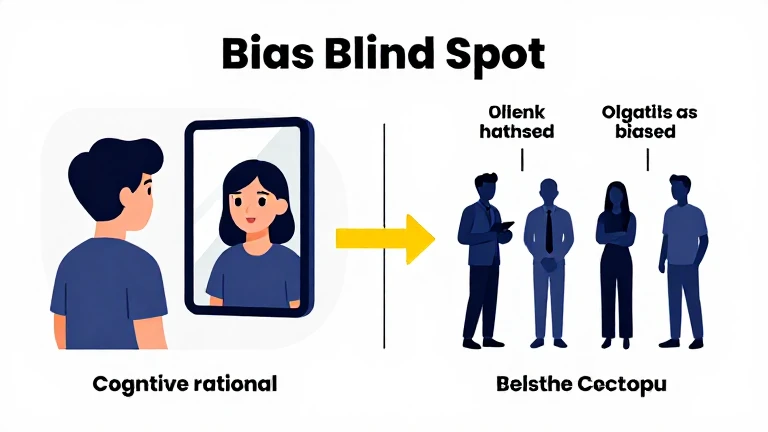
Human decision-making is often influenced by cognitive biases—systematic patterns of thinking that can affect judgment and perception. Interestingly, while people can easily identify bias in others, they often fail to recognize it in their own thinking. This phenomenon is known as the Bias Blind Spot.
The Bias Blind Spot refers to the tendency for individuals to see themselves as less biased than other people. Even when people understand cognitive biases and believe they are thinking objectively, they may still be influenced by those biases without realizing it.
1. What Is the Bias Blind Spot?
The Bias Blind Spot occurs when people acknowledge that cognitive biases exist but assume they mostly affect others rather than themselves.
In other words, individuals may believe that their own decisions are rational and objective while assuming that others are influenced by emotions, assumptions, or flawed reasoning.
This bias can appear in many areas of life, including business decisions, political discussions, financial investing, and everyday judgments.
2. Why the Bias Blind Spot Happens
- Limited Self-Awareness: People have direct access to their intentions and thoughts, which makes them feel objective. Unconscious biases can still influence decisions.
- Focus on External Behavior: When evaluating others, people focus on observable actions. When evaluating themselves, they rely on internal reasoning.
- Desire for Objectivity: Wanting to see themselves as rational can make it difficult to recognize personal bias.
3. Examples of the Bias Blind Spot
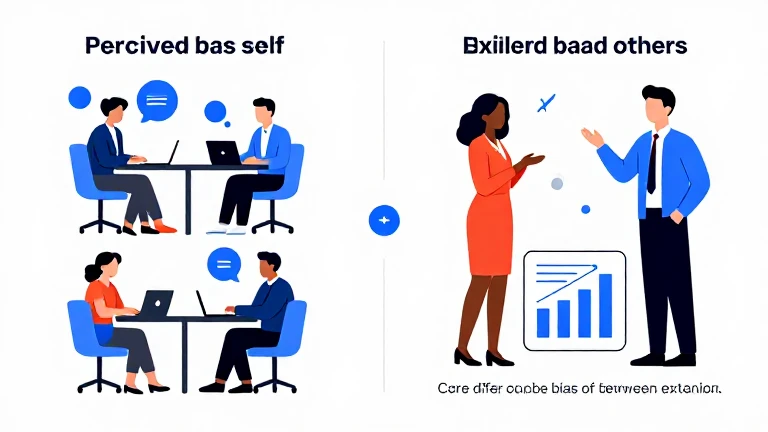
- Workplace Decisions: Managers may believe they are fair while assuming others show favoritism.
- Social and Political Discussions: People may accuse others of bias while seeing their own opinions as objective.
- Financial and Investment Decisions: Investors assume others are driven by emotion, while believing their own analysis is rational. Both may be influenced similarly.
4. Risks of the Bias Blind Spot
- Overconfidence in Judgments: Believing one’s reasoning is unbiased may lead to excessive confidence.
- Reduced Learning: Assuming objectivity may cause ignoring valuable feedback.
- Conflict with Others: Seeing others as biased while viewing oneself as rational can create misunderstandings.
5. How to Reduce the Bias Blind Spot
- Seek external perspectives: Feedback can reveal hidden biases.
- Question personal assumptions: Actively consider whether beliefs influence decisions.
- Use structured decision-making methods: Data, checklists, or clear evaluation criteria reduce subjective influence.
- Practice intellectual humility: Recognize everyone is susceptible to bias.
Conclusion
The Bias Blind Spot shows that people are often better at recognizing bias in others than in themselves. This tendency can influence decisions in business, investing, and everyday life.
By remaining open to feedback, questioning assumptions, and acknowledging personal bias, individuals can develop more thoughtful and balanced decision-making habits.
Category
Finance / Investment | Behavioral Psychology
Tags
#InvestmentPsychology
#BehavioralFinance
#BiasBlindSpot
#CognitiveBias
#DecisionMaking
#StockMarketPsychology
#InvestorMindset
#CriticalThinking
#SelfAwareness
#TradingPsychology
'Behavioral Finance' 카테고리의 다른 글
| Clustering Illusion: Seeing Patterns in Random Events (0) | 2026.03.13 |
|---|---|
| Choice-Supportive Bias: Why We Defend Our Past Decisions (0) | 2026.03.12 |
| Belief Bias: How Personal Beliefs Influence Logical Thinking (0) | 2026.03.12 |
| Base Rate Fallacy: When Ignoring Statistics Leads to Wrong Conclusions (0) | 2026.03.11 |
| Base Rate Neglect: Why People Ignore Important Statistical Information (0) | 2026.03.11 |


