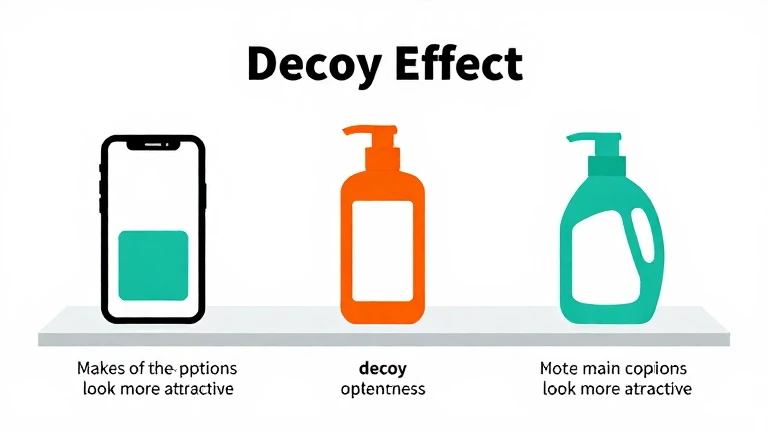
When people make decisions between two options, the choice may seem straightforward. However, the introduction of a third option—designed in a particular way—can significantly influence the final decision. This psychological phenomenon is known as the Decoy Effect.
The Decoy Effect occurs when an additional option is introduced to make one of the original choices appear more attractive, even though the third option itself is rarely selected. This strategy is often used in marketing, pricing, and consumer decision-making.
1. What Is the Decoy Effect?
The Decoy Effect refers to a situation where preferences between two options change after a third, less attractive option is introduced.
The third option, known as the decoy, is designed to be clearly inferior to one of the main options but similar enough to influence comparisons.
As a result, people are more likely to choose the option that appears superior when compared with the decoy.
2. A Simple Example
Imagine choosing between two subscription plans:
- Option A: Online subscription for $10
- Option B: Online + print subscription for $20
Some people may choose Option A because it is cheaper.
Now consider adding a third option:
- Option A: Online subscription for $10
- Option B: Online + print subscription for $20
- Option C (Decoy): Print-only subscription for $18
The decoy (Option C) makes Option B look like a much better deal because it offers both online and print for only slightly more money.
As a result, more people choose Option B.
3. Why the Decoy Effect Works
Several psychological mechanisms contribute to this bias:
- Relative Comparison: People evaluate options by comparing them rather than assessing each one independently.
- Asymmetric Dominance: The decoy is intentionally designed to be worse than one option but not necessarily worse than all options.
- Decision Simplification: When choices become complex, comparisons help people make faster decisions.
4. Examples of the Decoy Effect
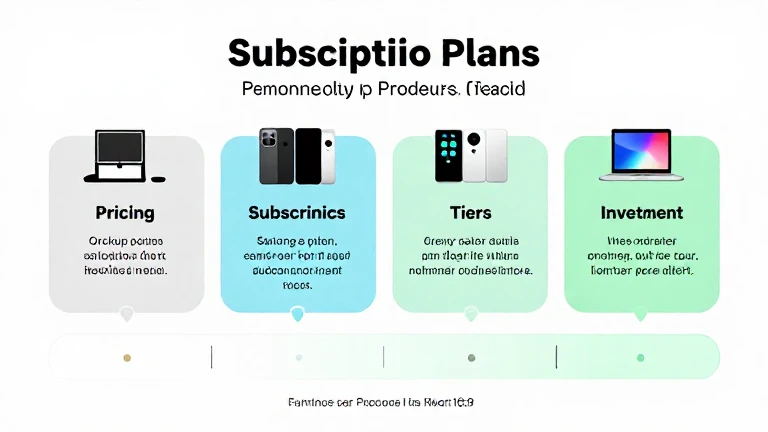
- Pricing Strategies: Businesses introduce a slightly inferior option to guide customers toward a profitable choice.
- Subscription Plans: Streaming services or software tiers often design pricing to encourage mid-range or premium selections.
- Consumer Electronics: Displaying basic, premium, and slightly overpriced mid-level versions influences purchases.
- Investment Products: Certain funds or strategies may appear more attractive when compared with a less favorable alternative.
5. How to Avoid the Decoy Effect
Consumers can make more rational decisions by recognizing when a decoy option is influencing their judgment:
- Evaluate options independently: Consider whether the preferred option is still attractive without the decoy.
- Focus on personal needs: Choose what genuinely meets your requirements, not what looks better comparatively.
- Compare absolute value: Look at actual benefits and costs rather than relative comparisons.
- Take time before deciding: Slowing down reduces the impact of subtle psychological cues.
Conclusion
The Decoy Effect demonstrates how the structure of choices can influence decisions more than the options themselves. By introducing a strategically designed third option, businesses and marketers can guide consumer preferences.
Understanding this bias helps individuals recognize when their decisions may be shaped by comparison rather than objective evaluation, leading to more deliberate and informed choices.
Category
Behavioral Psychology | Consumer Behavior
Tags
#CognitiveBias
#DecoyEffect
#ConsumerBehavior
#MarketingStrategy
#PricingPsychology
#DecisionMaking
#BehavioralEconomics
#ChoiceArchitecture
#RationalDecision
'Behavioral Finance' 카테고리의 다른 글
| Duration Neglect: Why We Ignore How Long an Experience Lasts (0) | 2026.03.16 |
|---|---|
| Denomination Effect: How the Size of Money Units Influences Spending (0) | 2026.03.16 |
| Curse of Knowledge: When What We Know Makes Communication Harder (0) | 2026.03.15 |
| Contrast Effect: How Comparisons Influence Our Perception (0) | 2026.03.15 |
| Conservatism (Bayesian): Why People Update Beliefs Too Slowly (0) | 2026.03.14 |


