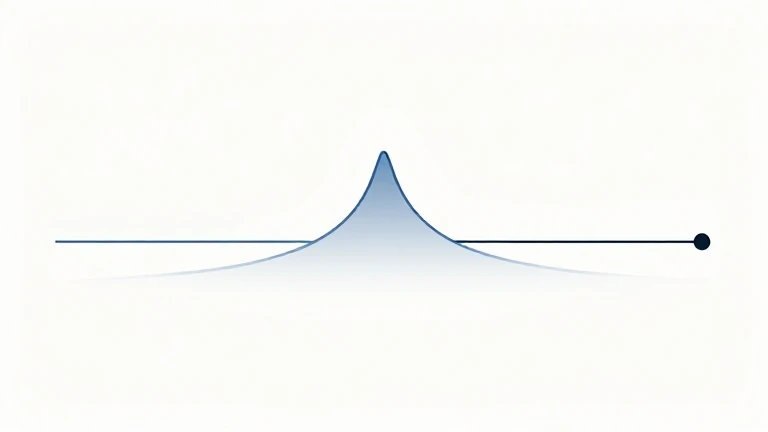
When evaluating past experiences, people often focus on how intense the experience felt rather than how long it lasted. This psychological tendency is known as Duration Neglect.
Duration Neglect refers to the tendency to ignore the length of an experience when judging how positive or negative it was overall. Instead, people often base their evaluations on the most intense moment or how the experience ended.
This bias plays an important role in how individuals remember events, make decisions, and predict future satisfaction.
1. What Is Duration Neglect?
Duration Neglect occurs when the perceived quality of an experience is judged without giving sufficient weight to its actual duration.
- A longer positive experience should theoretically produce more satisfaction than a shorter one.
- In reality, people often evaluate experiences based on key moments rather than total time.
This can lead to surprising differences between what people experience and what they remember.
2. The Peak-End Rule Connection
Duration Neglect is closely related to the Peak-End Rule, developed by Daniel Kahneman.
- People evaluate experiences primarily based on:
- The peak moment (most intense point)
- The ending of the experience
- Overall length often receives much less attention in memory.
3. Examples of Duration Neglect

- Medical Experiences: Patients may remember procedures as less painful if the ending is comfortable, even if the total discomfort was long.
- Entertainment and Travel: A vacation with a few memorable highlights and a good ending is often remembered positively.
- Customer Experiences: Businesses focus on strong moments or pleasant endings because they shape memory of the whole experience.
- Investing and Financial Decisions: Investors may judge a strategy based on dramatic gains or losses rather than long-term consistency.
4. Why Duration Neglect Happens
Several psychological mechanisms contribute to this bias:
- Memory Simplification: The brain compresses complex experiences into a few memorable moments.
- Emotional Intensity: Strong moments are easier to recall than long periods of moderate experience.
- Cognitive Efficiency: Focusing on key moments reduces the mental effort needed to evaluate long experiences.
5. How to Reduce Duration Neglect
Awareness of this bias can help make more balanced evaluations:
- Consider the full timeline: Evaluate experiences based on the entire duration, not just peaks.
- Track objective measures: Use time, frequency, or consistency for accurate assessment.
- Reflect on long-term patterns: Repeated experiences often provide more reliable insights.
- Avoid relying solely on memory: Memories emphasize emotional peaks while overlooking total experience.
Conclusion
Duration Neglect shows that people judge experiences based on key moments rather than full length. While peaks and endings strongly influence perception, they may not represent the total experience accurately.
By considering entire durations and long-term patterns, individuals can make more balanced judgments and better decisions.
Category
Behavioral Economics | Cognitive Bias
Tags
#CognitiveBias
#DurationNeglect
#PeakEndRule
#DecisionMaking
#BehavioralPsychology
#MemoryBias
#ConsumerBehavior
#InvestingPsychology
#EmotionalImpact
#CriticalThinking
'Behavioral Finance' 카테고리의 다른 글
| Endowment Effect: Why We Value What We Own (0) | 2026.03.17 |
|---|---|
| Empathy Gap: Why It’s Hard to Understand Others’ Emotional States (0) | 2026.03.16 |
| Denomination Effect: How the Size of Money Units Influences Spending (0) | 2026.03.16 |
| Decoy Effect: How a Third Option Influences Our Choices (0) | 2026.03.15 |
| Curse of Knowledge: When What We Know Makes Communication Harder (0) | 2026.03.15 |


