728x90
반응형
Planning Fallacy refers to the tendency for people to underestimate the time, cost, and effort required to complete tasks, even when they have past experience suggesting otherwise.
1. What Is the Planning Fallacy?
- Individuals often create overly optimistic plans.
- They assume tasks will be completed faster and more smoothly than reality allows.
- Past delays are often ignored or underestimated.
2. Why It Happens
- Optimism Bias: Expecting positive outcomes and smooth progress.
- Inside View Thinking: Focusing only on the current plan rather than past experiences.
- Underestimating Complexity: Ignoring unexpected obstacles or delays.
- Motivational Factors: Wanting plans to look achievable and appealing.
3. Examples of the Planning Fallacy
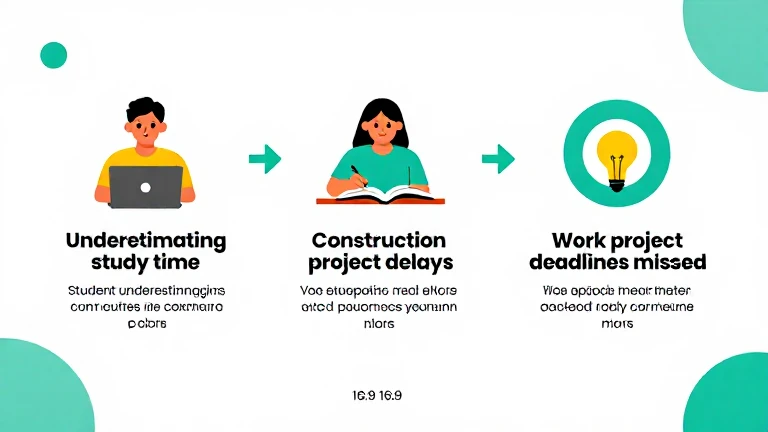
- Studying: Students underestimate how long it takes to prepare for exams.
- Work Projects: Deadlines are missed due to overly optimistic schedules.
- Construction: Projects often exceed initial timelines and budgets.
- Daily Tasks: Simple plans take longer due to interruptions or unforeseen issues.
4. Risks of the Planning Fallacy
- Missed Deadlines: Failure to complete tasks on time.
- Budget Overruns: Costs exceed initial estimates.
- Stress and Pressure: Last-minute rush due to delays.
- Reduced Credibility: Repeated underestimation affects trust.
5. How to Overcome the Planning Fallacy
- Use the Outside View: Base estimates on similar past projects.
- Add Buffers: Include extra time and resources for uncertainty.
- Break Tasks Down: Smaller steps improve estimation accuracy.
- Track Past Performance: Learn from previous planning mistakes.
- Plan for Delays: Assume unexpected obstacles will occur.
Conclusion
The Planning Fallacy highlights how people tend to underestimate time and overestimate efficiency. While optimism can motivate action, it often leads to unrealistic plans.
By using realistic data, buffers, and past experience, individuals can create more accurate plans and achieve better outcomes.
Category
Cognitive Bias | Productivity | Decision-Making
Tags
#PlanningFallacy
#CognitiveBias
#Productivity
#TimeManagement
#DecisionMaking
반응형
'Behavioral Finance' 카테고리의 다른 글
| Pro-Innovation Bias: Assuming New Is Always Better (0) | 2026.03.30 |
|---|---|
| Post-Purchase Rationalization: Justifying Our Choices (0) | 2026.03.30 |
| Pessimism Bias: Expecting the Worst (0) | 2026.03.29 |
| Pareidolia: Seeing Meaning Where There Is None (0) | 2026.03.29 |
| Overconfidence Bias: When Confidence Exceeds Reality (0) | 2026.03.28 |


