728x90
반응형

Pareidolia refers to the tendency to perceive familiar patterns—especially faces—in random or ambiguous stimuli.
1. What Is Pareidolia?
- People detect meaningful shapes or patterns where none actually exist.
- Most commonly, individuals see faces in objects like clouds, buildings, or food.
- It reflects the brain’s strong ability to recognize patterns quickly.
2. Why It Happens
- Evolutionary Advantage: Quickly recognizing faces helped survival and social interaction.
- Pattern Recognition: The brain is wired to detect structure in randomness.
- Face Sensitivity: Humans are especially tuned to identify faces.
- Cognitive Efficiency: It’s faster to assume a pattern than to analyze randomness deeply.
3. Examples of Pareidolia
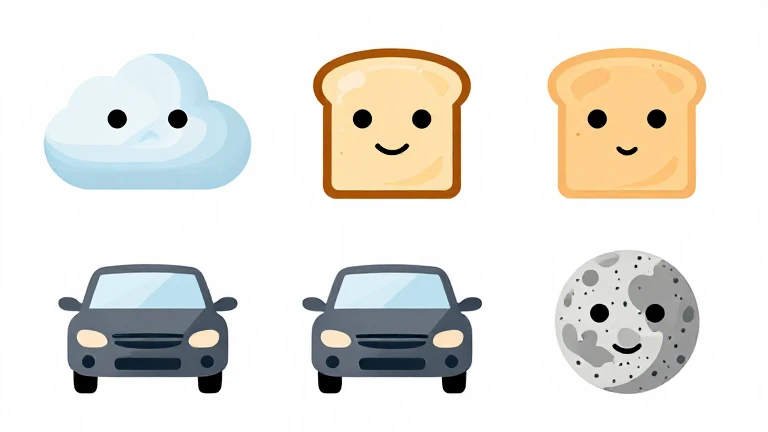
- Nature: Seeing shapes or faces in clouds or rock formations.
- Objects: Noticing “faces” in cars, outlets, or household items.
- Food: Recognizing patterns in toast, fruit, or coffee foam.
- Astronomy: Interpreting shapes on the moon or planets as familiar figures.
4. Risks & Implications
- False Interpretations: Seeing meaning where none exists.
- Superstitions: Misinterpreting random patterns as signs or messages.
- Cognitive Errors: Drawing conclusions from visual illusions.
- Creative Benefit: On the positive side, it can enhance imagination and creativity.
5. How to Understand Pareidolia
- Recognize It as a Bias: Understand that the brain is filling in patterns.
- Question First Impressions: Not all patterns are meaningful.
- Use Evidence: Look for objective confirmation before forming conclusions.
- Appreciate Creativity: Use it as a tool for art, design, and imagination.
Conclusion
Pareidolia shows how the human brain is wired to find patterns and meaning, even in randomness. While this ability supports creativity and quick recognition, it can also lead to misinterpretation of reality.
By balancing intuition with critical thinking, individuals can enjoy creativity without being misled by illusions.
Category
Cognitive Bias | Psychology | Perception
Tags
#Pareidolia
#CognitiveBias
#Perception
#PatternRecognition
#Psychology
반응형
'Behavioral Finance' 카테고리의 다른 글
| Planning Fallacy: Why We Underestimate Time and Effort (0) | 2026.03.29 |
|---|---|
| Pessimism Bias: Expecting the Worst (0) | 2026.03.29 |
| Overconfidence Bias: When Confidence Exceeds Reality (0) | 2026.03.28 |
| Outcome Bias: Judging Decisions by Results (0) | 2026.03.28 |
| Optimism Bias: Why We Expect the Best (0) | 2026.03.27 |


