
As we observe the shifting economic signals in early 2026, many investors find themselves at a crossroads. Why is it that even seasoned professionals often fail to react when a crisis is staring them in the face? The answer lies deep within our psychology, in a phenomenon known as Normalcy Bias. Understanding this bias is not just an academic exercise; it is a critical skill for survival in the volatile financial markets.
What Is Normalcy Bias? The Silent Portfolio Killer Normalcy Bias refers to the mental tendency to underestimate the possibility and impact of disasters. Most people instinctively assume that things will continue to function in the future as they always have in the past.
In the world of investing, this leads individuals to ignore or downplay potential threats, even when warning signs are flashing red. This bias creates a dangerous "Cognitive Comfort," where accepting the possibility of a market crash requires too much mental effort and creates immediate anxiety. As a result, people delay taking action during critical situations, often until it is too late.
Why Our Brains Choose Denial Over Reality Humans are hardwired for stability. Our desire for consistency and routine makes us prefer a predictable environment. This is reinforced by Past Experience: if you have invested through five years of a bull market without a major crash, your brain assumes a crash won't happen today.
Furthermore, Information Overload plays a significant role. When the media provides conflicting reports about inflation or interest rates, the brain often defaults to inaction. We tell ourselves "it's probably nothing serious" just to maintain emotional balance, even when the data suggests otherwise.
Real-World Impacts: From Disaster Zones to Wall Street Normalcy Bias manifests in various high-stakes scenarios:
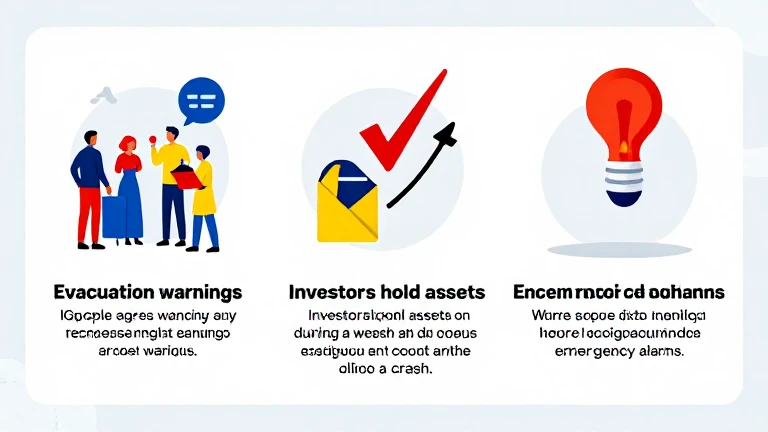
- Financial Markets: During major downturns like the 2008 crisis or the 2020 pandemic, many investors held onto depreciating assets, expecting a recovery without any defensive action.
- Disaster Situations: It is the same reason people delay evacuation during hurricanes or fires—they assume "it won't be that bad this time."
- Health & Workplace: Whether it's ignoring early symptoms of illness or assuming a fire alarm is just another drill, this bias leads to a false sense of security that increases damage and loss.
How to Overcome Normalcy Bias and Protect Your Wealth To become a resilient investor, you must actively fight your brain's natural tendencies. Here is how:
- Acknowledge Uncertainty: Move away from the mindset that "the future must resemble the past." Accept that black swan events are a part of the market cycle.
- Use Data-Driven Signals: Instead of relying on gut feelings, pay attention to objective indicators and clear exit strategies (Stop-loss levels).
- Practice Mental Scenarios: Regularly ask yourself, "If the market drops 20% tomorrow, what is my exact plan?" Rehearsing your response reduces the paralysis caused by shock.
- Take Warnings Seriously: It is always better to be early and wrong than late and ruined. Act on early signals rather than waiting for 100% confirmation.
Normalcy Bias provides psychological comfort, but it is a luxury that serious investors cannot afford. By recognizing early signals and preparing for the "unlikely," you can respond faster and make better decisions when uncertainty arises.
Remember, in a high-risk world, the most dangerous move is to assume that everything is normal. Stay alert, stay prepared, and let your criteria—not your emotions—guide your journey.
[Category] Investment Psychology | Risk Management | Behavioral Finance
[Tags] #NormalcyBias #InvestmentStrategy #CognitiveBias #RiskManagement #WarrenBuffett #FinancialFreedom
'Behavioral Finance' 카테고리의 다른 글
| Omission Bias: Why Doing Nothing Feels Safer (0) | 2026.03.27 |
|---|---|
| Observer-Expectancy Effect: How Expectations Shape Outcomes (0) | 2026.03.26 |
| Neglect of Probability: Ignoring the Odds (0) | 2026.03.26 |
| Negativity Bias: Why We Focus on the Bad (0) | 2026.03.26 |
| Money Illusion: When Nominal Value Misleads You (0) | 2026.03.25 |


