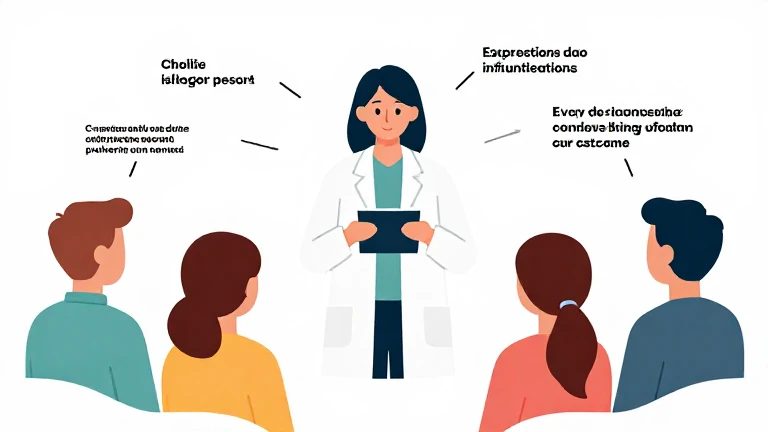
[Introduction] Have you ever noticed that when you strongly believe a stock will go up, every piece of news suddenly looks like a "buy" signal? This isn't just luck; it’s a psychological trap. In science and daily life, this is known as the Observer-Expectancy Effect. It occurs when our subconscious beliefs unintentionally shape the very reality we are trying to observe. Whether you are a researcher, a teacher, or a retail investor, this bias can quietly distort your objective judgment.
[H2] What Is the Observer-Expectancy Effect? The "Hidden Influencer" The Observer-Expectancy Effect is a phenomenon where a person’s expectations lead them to influence a situation or a study's outcome, often without realizing it. We communicate our expectations through subtle, nonverbal cues—tone of voice, gestures, or even posture.
In a professional setting, these cues can influence participants to behave in ways that confirm the observer’s original hypothesis. This creates a feedback loop where the results don't reflect objective reality, but rather a reflection of the observer's own bias.
[H2] Why It Happens: The Power of Unconscious Bias Why are we so prone to this? It usually boils down to three core reasons:
- Unconscious Projection: Humans naturally project their beliefs onto their environment to make sense of the world.
- Nonverbal Communication: We are social creatures. Tiny changes in facial expressions or tone can signal to others what we "want" to hear.
- Confirmation Desire: There is a deep psychological reward in being "right." Subconsciously, we seek out results that match our pre-existing beliefs to avoid the discomfort of being wrong.
[H2] Real-World Impacts: From Classrooms to Financial Markets This effect stretches far beyond the laboratory:
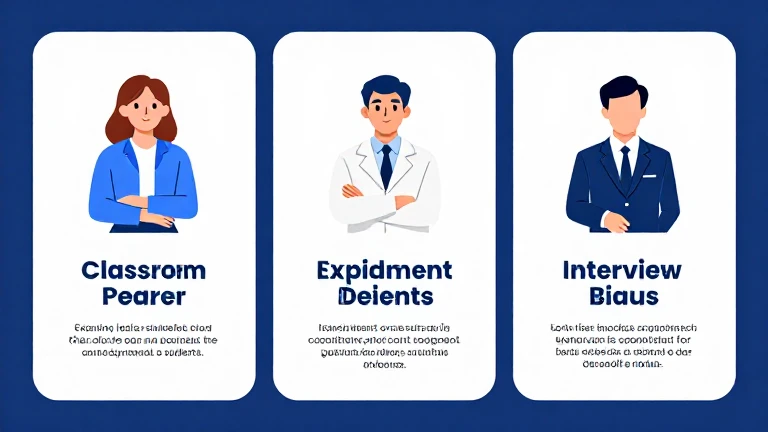
- Education (The Pygmalion Effect): When a teacher expects a student to succeed, that student often performs better—not just because of their ability, but because the teacher’s subtle encouragement shapes the student's behavior.
- Investing & Interviews: An interviewer who favors a candidate might skip over their flaws, while an investor who loves a company might ignore "sell" signals, unconsciously looking for reasons to stay invested.
- Medical Studies: Doctors' high expectations for a new treatment can sometimes influence how patients report their recovery, leading to distorted clinical data.
[H2] How to Combat Bias: Strategies for Objective Decision-Making To make fair and accurate decisions, we must remove the "observer" from the equation as much as possible. Here is how you can reduce the impact:
- Use Double-Blind Procedures: In research, neither the participant nor the observer should know key details. In investing, try looking at a company's data without looking at its name first.
- Standardize Your Process: Whether you’re interviewing or analyzing a stock, use a consistent checklist or set of instructions to keep interactions uniform.
- Prioritize Objective Data: Rely on hard metrics and cold data rather than subjective feelings or "gut instincts."
- Seek Peer Review: Ask a neutral third party to evaluate your findings. An external eye can often see the biases that you are blind to.
[Conclusion] The Observer-Expectancy Effect reminds us that our expectations are not just internal thoughts—they are active forces that can shape our reality. By acknowledging our own biases and shifting toward more objective methods, we can make more accurate and fair decisions.
Next time you are sure about an outcome, ask yourself: "Am I seeing the truth, or am I just seeing what I expect to see?" The answer to that question might be the key to your next successful investment or decision.
[Category] Psychology | Decision Making | Behavioral Science
[Tags] #ObserverExpectancyEffect #PsychologyTips #CognitiveBias #ObjectiveThinking #InvestmentPsychology #SelfImprovement
'Behavioral Finance' 카테고리의 다른 글
| Optimism Bias: Why We Expect the Best (0) | 2026.03.27 |
|---|---|
| Omission Bias: Why Doing Nothing Feels Safer (0) | 2026.03.27 |
| Why Smart Investors Fail to See the Crash: Understanding Normalcy Bias (0) | 2026.03.26 |
| Neglect of Probability: Ignoring the Odds (0) | 2026.03.26 |
| Negativity Bias: Why We Focus on the Bad (0) | 2026.03.26 |


